



Working from home has a lot going for it. But it does something weird to eating habits. The kitchen is ten feet away, so you either graze all day without thinking about it — or you get so locked into work that you look up at 3pm and realize you haven't eaten since breakfast.
Neither is great for focus. Here's how to actually fuel a remote workday.
Why Remote Work Messes with Your Eating
In an office, there's a natural structure to the day — you leave for lunch, you have a commute that breaks things up, you're not staring at a full fridge during every meeting. At home, all of that disappears.
The two most common patterns remote workers fall into:
-
Mindless grazing — snacking continuously throughout the day, usually on whatever's easy to grab, which means more chips and less actual nutrition
- Skipping meals entirely — getting into a flow state and forgetting to eat until you're running on fumes and can't focus on anything
Both lead to the same place: inconsistent energy, afternoon brain fog, and a general sense that you're not performing at your best. The fix is basically the same too — eating intentionally instead of reactively.
IQBAR — Keep One at Your Desk
The simplest change most remote workers can make is having something good already at their desk so they're not walking to the kitchen every time they're hungry.
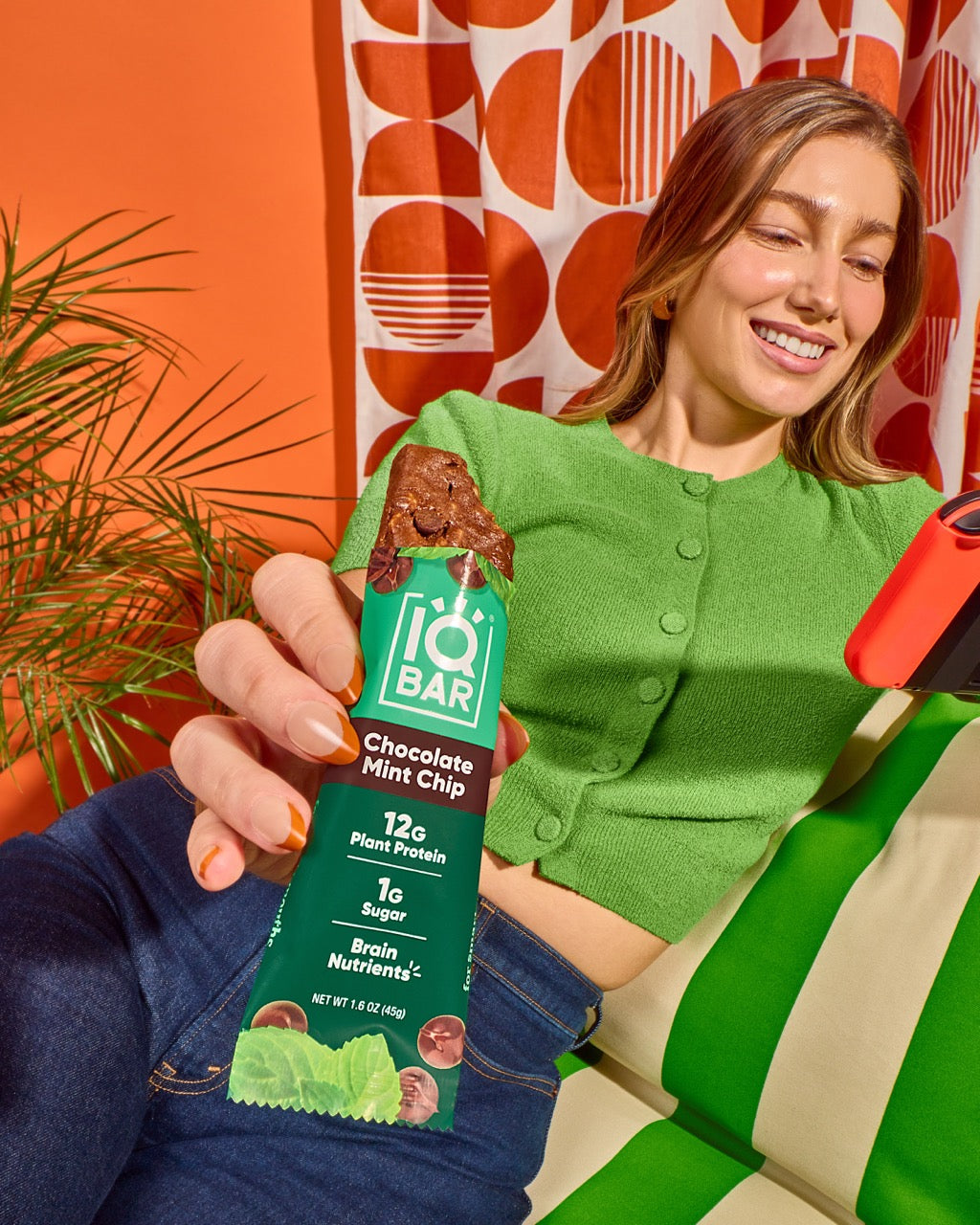
IQBAR is worth keeping in your home office specifically because it's built for brain performance — 12g of plant-based protein, 6–9g of fiber, and only 1g of sugar, plus nutrients shown to support focus and cognitive function: Lion's Mane, Magnesium L-Threonate (Magtein®), MCTs, Vitamin E, and Flavonoids.
That matters when you're trying to get through a long afternoon of calls and deep work. The low sugar means no crash, and the brain nutrients mean you're actually giving your head what it needs to stay sharp — not just taking the edge off hunger.
Keep a box in your desk drawer. Eat one mid-morning or mid-afternoon before you get hungry enough to make bad decisions.
Other Snacks That Work Well When You Work from Home
You have an advantage that office workers don't — access to a real kitchen. Use it.
Hard-boiled eggs — make a batch on Sunday and they're grab-and-go all week. High protein, zero carbs, genuinely filling. Eat two and you won't be hungry again for hours.
Greek yogurt with berries — a solid mid-morning option. Protein from the yogurt, antioxidants from the berries, and enough fiber to keep your energy even. Takes about 90 seconds to put together.
Walnuts or almonds — keep a small bowl on your desk. Easy to eat without interrupting your work, and the omega-3s in walnuts specifically are good for brain health over the long term.
Avocado on whole grain toast — a proper lunch option when you want something more substantial. Healthy fats from the avocado support sustained focus, and it takes about three minutes to make.
Blueberries — throw a handful in a bowl and keep it next to your monitor. Easy to snack on during a call, and genuinely one of the best foods for brain health. The antioxidants help protect your brain and have been linked to better memory and focus.
Dark chocolate (70%+) — a square or two in the afternoon is a legitimate focus booster. The combination of flavonoids and a small amount of caffeine improves blood flow to the brain. Much better than reaching for another coffee at 3pm.
How to Structure Eating When Your Day Has No Structure
The lack of built-in schedule is the real challenge of remote work nutrition. A few things that help:
Eat breakfast before you open your laptop. Starting the day with protein — eggs, Greek yogurt, a protein bar — sets your blood sugar up for a stable morning instead of a spike and crash before noon.
Set a lunch alarm. Sounds basic, but if you don't, you'll work through it. A real lunch break — away from your desk — gives your brain a reset and keeps you from grazing all afternoon to compensate.
Have a mid-afternoon snack ready before you need it. The 2–3pm window is when most people lose focus. If you have an IQBAR or a handful of nuts already at your desk, you eat something good. If you don't, you end up in the kitchen eating whatever's there.
Stop eating after dinner. One underrated remote work issue: being home all evening makes it easy to snack late. Late eating can disrupt sleep, and poor sleep is one of the biggest destroyers of next-day focus.
What to Watch Out For
-
Coffee on an empty stomach — spikes cortisol and can actually increase anxiety and make it harder to concentrate. Eat something first.
-
Too much caffeine, too late — remote workers often drink coffee throughout the afternoon because it's right there. Caffeine after 2pm can wreck your sleep even if it doesn't feel like it's keeping you up.
-
Eating at your desk during calls — mindless eating is a real thing. If you're eating while distracted, you're more likely to overeat and less likely to notice when you're full.
- Forgetting water — dehydration is one of the most common and most overlooked causes of afternoon brain fog. Keep a water bottle on your desk and refill it at lunch.
Frequently Asked Questions
What should I eat for lunch when working from home?
Something with protein, healthy fats, and vegetables — enough to fuel the afternoon without making you want to nap. Eggs with avocado toast, a grain bowl, salmon with greens, or Greek yogurt with fruit are all solid options. Keep it simple enough that you'll actually make it instead of defaulting to delivery.
What are the best snacks for working from home?
Snacks that give you steady energy without a crash — protein bars like IQBAR, hard-boiled eggs, walnuts, blueberries, Greek yogurt, or dark chocolate. The goal is to keep blood sugar even so you don't get that mid-afternoon fog. Avoid chips, crackers, and anything high in sugar that spikes your energy briefly and then drops it.
How do I stop snacking so much when I work from home?
Usually the problem isn't snacking — it's snacking on the wrong things at the wrong times. Eating a proper breakfast and lunch with enough protein keeps you fuller for longer and reduces the urge to graze. Having good snacks pre-portioned at your desk also helps — you eat something intentionally instead of wandering to the kitchen and eating whatever's there.
What foods help with focus when working from home?
Foods that support sustained energy and brain function — protein, healthy fats, magnesium, and antioxidants. IQBAR is built specifically around brain nutrients for focus. Blueberries, walnuts, eggs, and dark chocolate are great whole-food additions. Avoid high-sugar snacks, which cause the energy crashes that make it hard to concentrate in the afternoon.
How much water should I drink while working from home?
The standard guidance is around 8 cups (64oz) per day, but actual needs vary. A practical approach: keep a water bottle on your desk and aim to finish it twice during the workday. If you're getting headaches or feeling foggy in the afternoon, dehydration is often the culprit before anything else.
The Bottom Line
Remote work nutrition comes down to one thing: being intentional instead of reactive. Eat breakfast before you start, take a real lunch break, and have good snacks ready so you're not making hunger decisions at 3pm.
If you want to make the afternoon easier on yourself, IQBAR is worth keeping at your desk — brain nutrients, 12g of protein, and no sugar crash. Your home office should work for you, not against you.